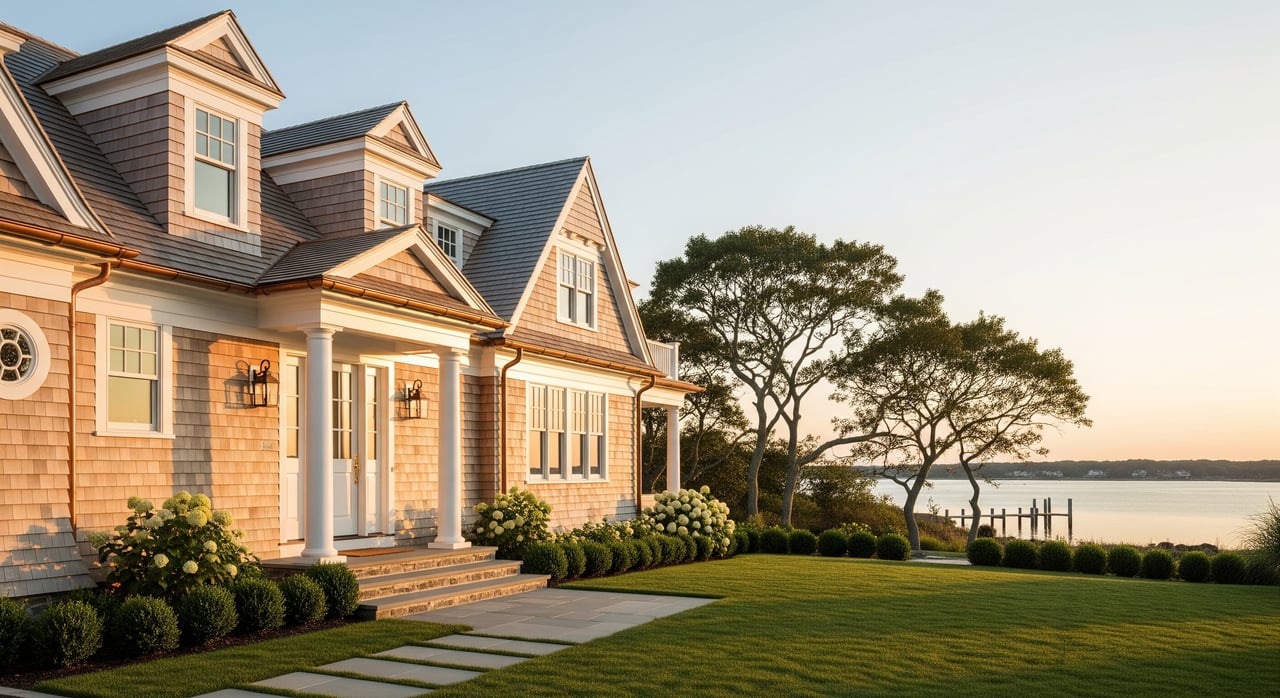
Massapequa Home Pricing Strategy With Smart Bands
January 1, 2026
January 1, 2026
Is a $100 difference around a round number like $600,000 really a big deal? If you are selling in Massapequa, it can be. Small shifts across common buyer price filters can change who sees your home online and who walks through the door. You want the best price, the right timeline, and a smooth closing. This guide shows you how pricing bands work here, which thresholds matter, and how to choose a strategy that aligns with your goals. Let’s dive in.
Price bands are the preset buyer search brackets you see on listing sites, such as “Under $600k” or “$600k–$700k.” Most buyers set a maximum price first, then browse within a band. Your list price determines which buyers can see your home when they use those filters.
Two effects make bands powerful. First is filter capture. If a buyer searches “Under $600,000,” a listing at $599,900 appears, while one at $600,000 does not. Second is psychological pricing. Many buyers perceive $599,900 as meaningfully lower than $600,000. That left‑digit and threshold effect can shape how your price feels at first glance.
Most buyers start online, set price minimums and maximums, and look on a map within a few towns. Many use round numbers for their ceilings, which means being inside a preset band makes you eligible for more searches.
Visibility is often binary at thresholds. A price just below a common cutoff can increase impressions, saves, and showings. Sorting can also help new listings rise in results for buyers who already match your range. Map pins can still surface your home for motivated shoppers, but strict price filters limit that effect.
Massapequa is mainly single‑family homes, with buyers who prioritize commute options, neighborhood amenities, and practical space. That buyer pool tends to start with round‑number budgets.
Locally, bands often watched include $500k, $600k, $700k, $800k, and $1M. The band effect is stronger where many comparable homes cluster near a threshold. Nassau County property taxes and total monthly payment also shape buyer ceilings, so small list‑price moves that change payment estimates can matter.
Seasonality plays a role. In spring and early summer when buyer traffic is heavy, a small price difference can produce outsized changes in foot traffic. In tight, low‑inventory moments, buyers sometimes widen their ranges, and band sensitivity can be lower.
There are two proven ways to use bands: pricing just below a band and pricing inside or above a band.
The numbers below are illustrative examples for clarity.
Appraisers look to recent comparable sales. If your accepted offer lands well above nearby comps, a financed buyer could face an appraisal gap. Competition and strong terms can help reduce the impact of a low appraisal, but you should review the highest and best comparable sales before committing.
If you open above a band and later reduce price to cross below it, you can trigger a fresh wave of attention. Buyers may also assume more reductions are coming. The cleanest read on market interest often comes in the first 7 to 14 days, so aligning with the right band at launch is valuable.
Use this simple plan to choose your pricing band with confidence.
Pre‑listing analysis
Listing and launch
If response is soft
Appraisal planning
Start with your top priority. If you want the highest possible net and can allow time for market exposure, pricing just below a key threshold can create the buyer competition that drives price. If you need to protect margin and your home has unique features, pricing into the next band can anchor expectations and help you negotiate from strength. If a quick, certain result is most important, undercutting to energize traffic can serve the timeline.
In Massapequa, thresholds around $500k, $600k, $700k, $800k, and $1M are the most watched. The best choice depends on current inventory, where comps sit, and how buyers are behaving this season.
Ask for a simple band sensitivity model before you list. You should see side‑by‑side scenarios that estimate impressions, showings, likely offer ranges, and appraisal considerations at two or three price points. That data makes the tradeoffs clear and helps you launch with confidence.
Ready to pick the right price band and maximize your first two weeks on market? Connect with Elpis Hardiman to build your pricing plan and get professional marketing that turns attention into strong offers.
Stay up to date on the latest real estate trends.




As a full-time, experienced real estate agent, she is highly knowledgeable about the areas she serves. Her expertise ensures smooth and enjoyable transactions for her clients!
Elpis Hardiman
5066 SUNRISE HWY MASSAPEQUA PARK NY 11762